
Categories
Charlotte News, Living In Charlotte, New Developments, Charlotte's Business ScenePublished October 24, 2026
$4 Billion Is Coming to South Charlotte: Where It's Going and What It Means for Homebuyers

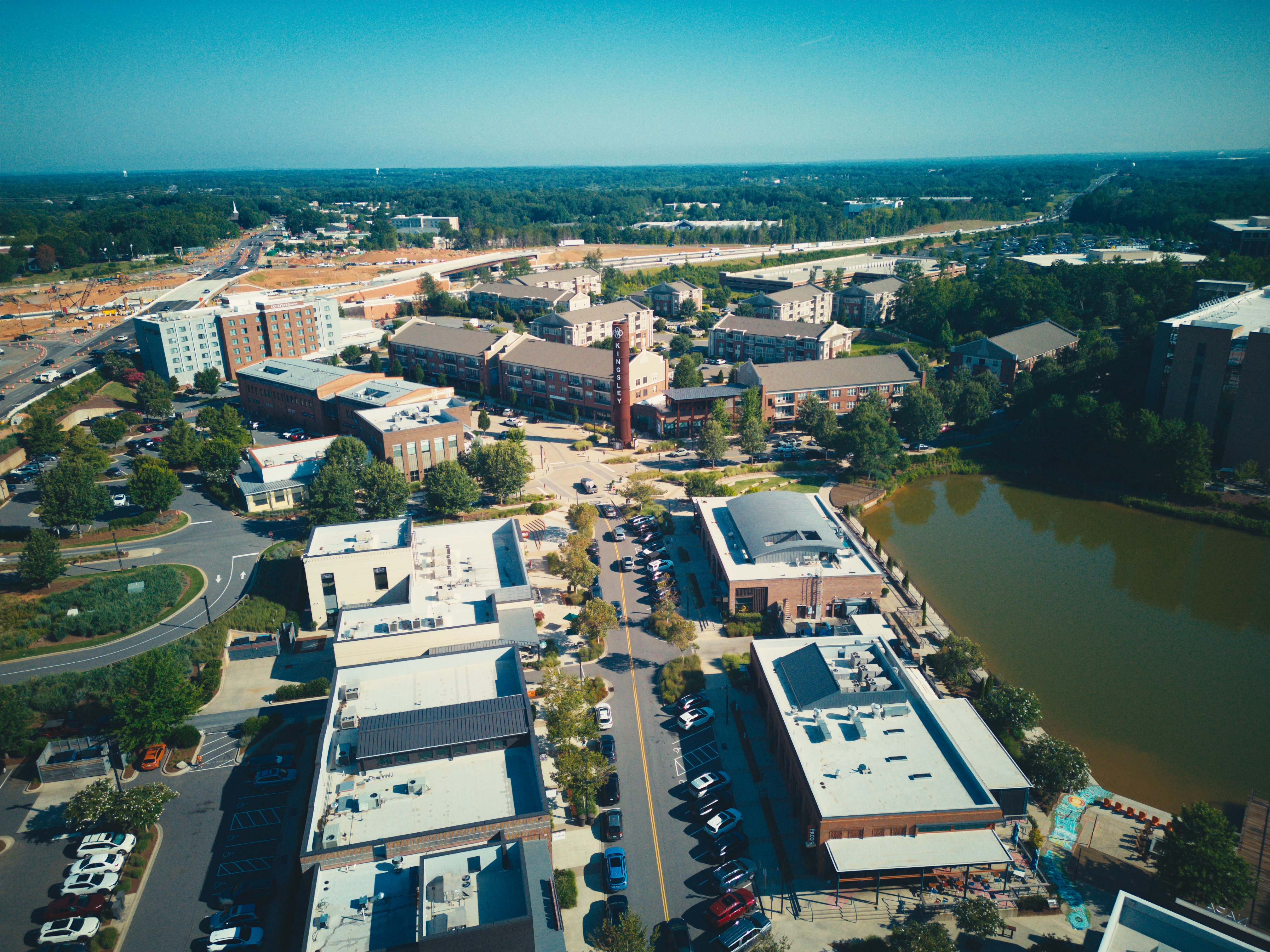
More than $4 billion in proposed highway improvements and grocery store investment is pointed at one of the Charlotte metro's fastest-growing corridors: I-77 South, from Uptown to the South Carolina line.
In this week's video, Jay White breaks down where that money is going, from Steele Creek and the River District to Fort Mill, Tega Cay, Lake Wylie, and Rock Hill, and what buyers should know before choosing where to live. Here are the highlights.
What is the $4 billion plan for South Charlotte?
It's really two separate bets on the same corridor. The bigger one is NCDOT's plan to add express lanes on 11 miles of I-77, from the South Carolina line up to I-277 in Uptown: two new lanes in each direction, with the existing lanes staying free and the express lanes using tolls that move with traffic. NCDOT's official cost estimate is about $3.2 billion; some reporting puts it closer to $4 billion. The plan is a public-private partnership, with the state putting in about $600 million and a private company financing the rest and collecting the tolls.
The second bet is Harris Teeter's. The grocer announced $253 million over the next three years in the Charlotte area: three new stores in Fort Mill, Lake Wylie, and Kannapolis, plus renovations in Fort Mill, Rock Hill, Matthews, Waxhaw, Concord, and Huntersville. Four of the nine locations it named are in York County, South Carolina.
Are the I-77 South toll lanes actually happening?
It's been a fight. In May, Charlotte City Council and the regional transportation board (CRTPO) both voted to pull their support, and NCDOT stopped work. This summer, the state legislature passed a law saying local governments that kept blocking the project would have to pay back what NCDOT had already spent, nearly $70 million, with an October 5 deadline to reconsider. The project also includes at least $300 million in community benefits for neighborhoods closest to the construction, including a planned $50 million recreation center in the Steele Creek area.
Then in September, both reversed: City Council voted 7 to 4 to back the project again, and CRTPO followed two days later. NCDOT has restarted work.
Still, don't buy a house counting on these lanes. NCDOT has said construction would start in the early 2030s, with design not finished until late 2027, and that was before this year's four-month pause. There is no official opening date. If you buy in Fort Mill this year, you're living with today's I-77 for a long time.
What did the I-77 North toll lanes teach us?
Charlotte doesn't have to guess how toll lanes work here. The I-77 Express Lanes run about 26 miles from Uptown to Mooresville and opened at the end of 2019, operated by I-77 Mobility Partners (controlled by Cintra, part of Ferrovial) under a 50-year contract with the state. Tolls change with traffic to keep express-lane speeds at or above 48 miles per hour.
What does that cost? When WSOC drove it in 2025, the most expensive trip it tracked was Mooresville to Uptown around 8:15 in the morning: $36.85 with a transponder, and over $55 without one. On the other side, Cintra says the free lanes now move 30 to 40 percent faster even while carrying about 13 percent more traffic. After the backlash up north, NCDOT says the south project will include toll rate caps, free use for transit, emergency vehicles, and carpools of three or more, and a discount program for low-income residents.
What does the growth look like in Steele Creek?
The Charlotte Premium Outlets opened there in 2014 with about 100 stores, and a six-story, 124-room Hilton Garden Inn next door just opened in August, with a rooftop bar planned. A few minutes away near I-485 and West Boulevard, the River District is taking shape: 1,400 acres by the Catawba River with plans for about 2,300 single-family homes, 2,350 apartments, and roughly 8 million square feet of office space, plus shops and restaurants. The first homeowner closed in 2025, and the first apartments opened in January. And down NC 49, McDowell Nature Preserve offers more than 1,100 acres of woods and trails on Lake Wylie.
Price-wise, Steele Creek's median has been running around $435,000 at roughly $206 per square foot, compared with about $420,000 and $237 per square foot for Charlotte as a whole. You're paying about the city median but getting newer homes and more square footage for the money. The trade is the drive: at 8 a.m., you're on the exact stretch of I-77 this whole toll-lane fight is about.
Why do grocery stores matter more than highway plans?
A highway plan can sit on a shelf for a decade. A grocery store is a company putting its own money on a specific corner, and it needs households nearby right now, not someday. The new Fort Mill Harris Teeter is planned for Fort Mill Parkway near Catawba Ridge High School, on land the chain bought back in 2015. It held that land for about a decade, waiting for enough rooftops. Now it's building.
That's the takeaway: grocery stores don't create a neighborhood, they confirm one. If the nearest full-size store to a new subdivision is 20 minutes away, you're probably early. If a chain just broke ground down the street, the area has already proven itself. That's a signal about established demand, not a guarantee that prices will rise.
What do homes cost across the state line?
Fort Mill has been one of South Carolina's fastest-growing towns, with census estimates of about 38,700 people in 2025, up from roughly 24,500 in 2020. That's nearly 58 percent growth in five years.
Recent medians: Tega Cay around $545,000 (about $239 per square foot, though this small market swings month to month), Fort Mill around $527,000 (about $228 per square foot; the median is down about 8 percent from a year ago while price per foot is up, which usually means a different mix of homes sold rather than an 8 percent value drop), Lake Wylie around $535,000 (about $211 per square foot, from an older public read), Rock Hill around $325,000 (about $190 per square foot), and York County overall around $420,000. In short: the further south you go on I-77, the more house you get, and Rock Hill runs roughly $100,000 below the Charlotte median.
Is South Carolina really cheaper on taxes?
It's more complicated than people assume. South Carolina property taxes can be lower on a primary residence because owner-occupied homes are assessed at 4 percent instead of 6 percent, but you have to file for that status. On income tax, North Carolina is currently lower for many households: NC's 2026 rate is 3.99 percent and scheduled to drop to 3.49 percent next year, while South Carolina's top 2026 rate is 5.21 percent. Live in Fort Mill and work in Charlotte, and you'll likely file in both states. Talk to a tax professional before assuming you're saving money; this isn't tax advice.
What could go wrong with this bet?
Four things, honestly. The toll lanes may not happen on anyone's timeline; this project has been voted up, voted down, and threatened with penalties for about a decade. Even if built, rebuilding bridges and interchanges on 11 miles of interstate means years of lane shifts, so the commute could get worse before it gets better. Toll lanes mainly help people who pay them; if your budget can't absorb a daily toll, your commute is still the free lanes. And growth means supply: new homes down the street compete with your resale, and Fort Mill's days on market (around 63, up from last year) already show it.
None of that means don't buy here. It means buy for today's commute and today's price, and treat the toll lanes as upside, not the plan.
How should buyers shop this corridor?
Drive the commute at the real time, twice: leave the actual street at 7:30 on a Tuesday and come back at 5:15. Pick your zone by where you work. Uptown or South End: Steele Creek keeps you in Charlotte at around the city median. Airport or west side: Steele Creek, the River District, or Lake Wylie (test the Buster Boyd Bridge drive). Work from home or Ballantyne: Fort Mill and Tega Cay put you in newer housing, mostly in the mid-$500s. Price first: Rock Hill gets you in around the low-to-mid $300s if you accept the longest drive. Then price the toll into your monthly budget like a utility bill, check how far the nearest full-size grocery store is, and look at what's permitted within about a mile of I-77.
One takeaway from Jay: trust the grocery store over the highway plan. Buy for the commute you'll have this year, and treat the toll lanes as a bonus if they show up.
Would you pay a daily toll to live where you want, or buy closer and skip it? Tell us in the comments on the video.
Check out the full video here.
Connect With RealizeCharlotte
📱 Instagram | TikTok | YouTube
https://instagram.com/realizecharlotte
https://tiktok.com/@realizecharlotte
https://youtube.com/@realizecharlotte
Work With the Jay White Team
Buy • Sell • Invest • Build Your Career
🤝 Careers: https://thejaywhiteteam.com/careers

Jay White
Operator/Partner | Jay White Team | Keller Williams Realty
or another way